

Founder, Chairman & Chief Executive Officer, KenHome® Corporation
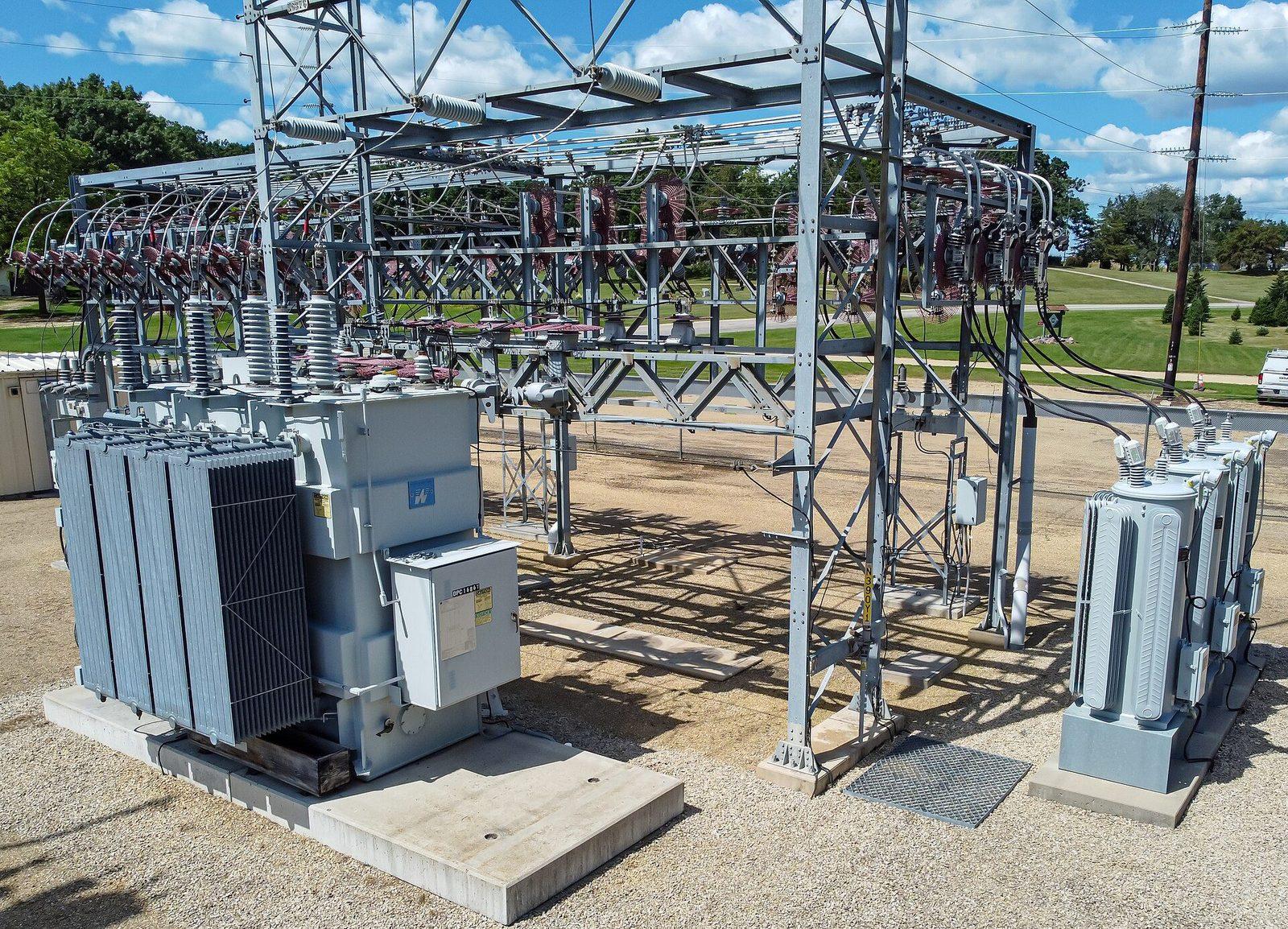
Photo: Wikideas1, Wikimedia Commons (CC0)
A data center can be finished and still be worth very little. The slab is poured, the white space is clean, the cooling plant is set, and the building earns nothing until power arrives at full capacity and the integrated systems test is passed. Substantial completion is a construction milestone. The financial milestone is first revenue, and that takes energization and a passed test.
That distinction is easy to agree with and hard to schedule around, because a data center runs on three clocks that are owned by different parties and do not stop for one another. The construction clock belongs to the builder. The equipment clock belongs to a small number of factories. The utility clock belongs to a grid operator, a transmission provider and, increasingly, a regulator. Most programs are drawn with the construction clock in the middle and the other two as inputs. In today’s market it should be the other way round.
The two clocks you do not control
Start with the equipment clock. Wood Mackenzie’s second-quarter 2025 survey, as reported by POWER magazine, put average lead times at 128 weeks for power transformers and 144 weeks for generator step-up units. The firm also estimated a 30 percent supply deficit for power transformers in 2025, and notes that about $1.8 billion of announced North American factory expansion will not close the gap on its own. These are averages, and averages are poor planning tools: the number that matters is the slot a specific factory will commit to in writing for a specific unit.
Now the utility clock. Texas shows how quickly it can move. ERCOT’s large-load queue has grown to about 474 gigawatts, roughly 90 percent of it data centers, more than five times the grid’s record peak demand. On August 3, 2026, the Governor directed ERCOT to verify data center loads before advancing them through interconnection. ERCOT paused approvals to energize data centers of 75 megawatts or more until that verification is complete, including projects that were otherwise moving toward power. It told the Public Utility Commission it was working toward a December 10 filing and that its first batch study would miss the original April 2027 date. By the time you read this, those dates may have moved again. A schedule that treats a utility date as a fixed input is carrying a risk it has not priced.
Texas is not an outlier in direction. Lawrence Berkeley National Laboratory’s most recent estimate has data centers reaching 11.8 percent of U.S. electricity use by 2030, within a scenario range of 9.5 to 15.3 percent. Grids everywhere will be asking harder questions about who gets connected, when, and on what terms.
A queue position is not a date
Experts have told the trade press that a substantial part of the Texas queue may be speculative or duplicative. Even the serious applications can be less ready than they look: in an August filing, ERCOT said only about 18 percent of the 290 dynamic models it had reviewed were acceptable on first review. So “we have a power position” can mean almost anything. We find it useful to think of power as a ladder, and to ask which rung a project is actually standing on:
- Rung one: a request has been filed.
- Rung two: a load study has been completed, and its assumptions still match the design.
- Rung three: an interconnection or service agreement is signed, with financial security posted.
- Rung four: the utility’s own equipment and the owner’s substation equipment are on order, with confirmed production slots.
- Rung five: energized, at the contracted capacity, with a ramp schedule that matches the tenant’s.
Each rung deserves a different level of capital. A lender or equity partner should be able to see the rung, the document that proves it and the capital that is allowed to move at that rung. That is the same logic as our Gate. Grade. Govern. process, applied to the one input that can strand everything else.
The price of being early, and the price of being late
Long-lead procurement creates a real dilemma. Wait for certainty about power and the factory slot is gone. Buy before certainty and you may own a very expensive transformer for a project that has slipped by two years.
We think the right way to look at a reservation is as an option, not a purchase. The deposit is a premium paid for the right to take delivery on a date. Like any option, it should be judged by what it costs, what it protects and what it can be turned into if circumstances change. That leads to better questions than “how much is the deposit?” Can the slot be moved? Can the unit be reassigned to another project or resold? Is the specification standard enough that someone else would want it? What is the cancellation schedule at each stage of manufacture?
The other side of the option is the cost of delay, which is more often assumed than calculated. As an illustration only: $100 million of capital carried at 8 percent costs about $667,000 a month before a single dollar of lost revenue, tenant penalty or remobilization. Carrying cost alone does not settle the question, though. The useful comparison is probability-weighted: the chance the project slips, times the part of the deposit that could not be recovered, against the chance of missing the slot, times the months of delay that would cost. Most teams have never written those four numbers down. Even rough estimates change the conversation, and they make the design team’s choices visible as well. Freezing an electrical specification early has a cost, and so does holding it open past a factory’s deadline.
Build the program from the far end
A program built backward starts with the date revenue must begin, then asks what has to be true the day before. An integrated systems test needs permanent power, or a planned and permitted way of substituting for it. That test needs commissioned systems. Those need installed gear. Installed gear needs a factory slot, and that slot had to be claimed before the design would normally have been finished. Followed all the way back, the chain often shows that the most urgent decision on a project due in three years has to be made this quarter.
Three practical consequences follow. Temporary or bridging power is a design, permitting and cost scope of its own, not a contingency to be improvised when the utility slips. Electrical design has to be released in stages, so the items that drive factory orders are fixed first. And commissioning has to be planned against the real power sequence, because a late service can compress the final stage of the job into the time nobody has left.
Why one schedule matters here most of all
This is where the structure of the contract stops being a legal matter and becomes an engineering one. KenHome’s EPC lifecycle is designed to put design management, procurement, construction and commissioning under one contract and one schedule, with design and engineering of record delivered by licensed engineering partners. Sourcing direct from manufacturers means the team sequencing the work is the team talking to the factory. When a utility date moves in that structure, one party owns the question of what to re-sequence, where a split program has five contractors each protecting their own dates.
None of that makes the utility move faster, and nobody can promise it will. What it does is shorten the time between a change in the outside world and a decision about it, and in a market like this one, that time is often the only part of the schedule an owner can really control.
Questions worth asking of any data center program
- Which rung of the power ladder are we on, and what document proves it?
- What is the written factory slot for each critical unit, not the market average?
- What can each equipment deposit be turned into if the project slips?
- What does one month of delay cost, calculated rather than assumed?
- If permanent power is late, what is the permitted plan for commissioning and first load?
Sources
- POWER magazine, “Transformers in 2026: Shortage, Scramble, or Self-Inflicted Crisis,” reporting Wood Mackenzie’s Q2 2025 survey.
- Wood Mackenzie, “Transformer troubles: manufacturing and policy constraints hit US transformer supply,” August 2025.
- ERCOT Market Notice M-A080326-01, August 3, 2026; ERCOT presentation to the Public Utility Commission of Texas, Project 59142, filed August 20, 2026; Utility Dive, “ERCOT aims to complete Texas governor’s data center audit by December,” August 2026.
- Lawrence Berkeley National Laboratory, United States Data Center Energy Usage Report: 2025 Update, June 2026.
- The carrying-cost figure is our own illustration, not project data. Regulatory dates are as of early November 2026.