

Founder, Chairman & Chief Executive Officer, KenHome® Corporation
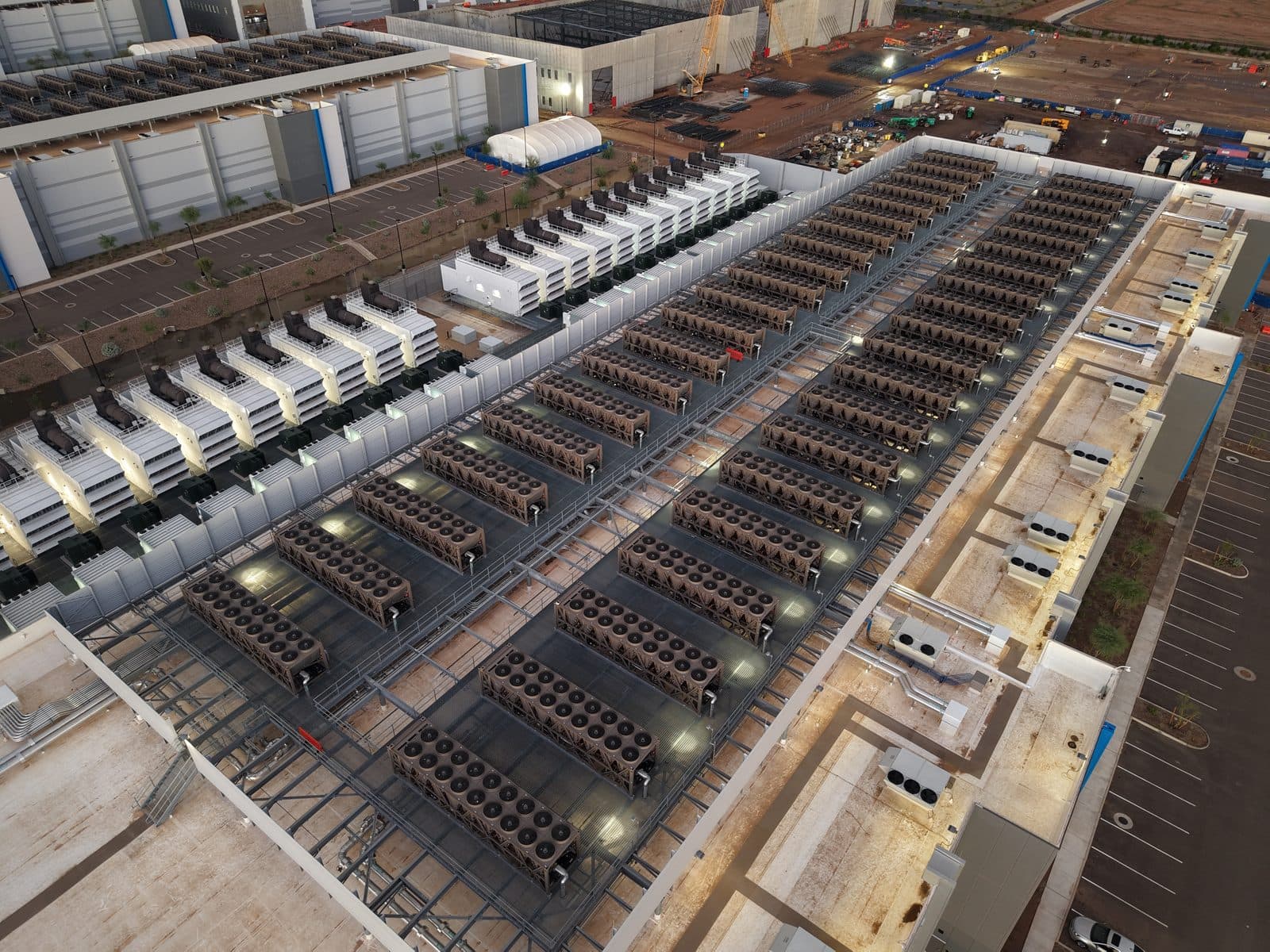
Photo: Rsparks3, Wikimedia Commons (CC0)
A data center is not a building with equipment in it. It is a machine with a building around it. The shell, the power train, the cooling plant, the cabling, the controls and the monitoring all have to work as one system on the day the first rack is energized, and they have to keep working as one system for the life of the asset.
Yet many data centers are procured as a collection of separate purchases. A general contractor builds the shell. A mechanical contractor installs cooling. An electrical contractor sets switchgear and distribution. A low-voltage firm pulls cable. An integrator programs the controls. Each signs its own contract, carries its own schedule and defends its own scope, and the owner becomes the integrator of last resort.
That arrangement can work. It also quietly moves the most expensive risk on the project, the risk that lives between scopes, onto the party least equipped to carry it.
The interface problem
Scope gaps rarely appear inside a single trade’s drawings. They appear at the boundaries: the conduit stub-up the electrical drawings show and the low-voltage drawings assume, the equipment pad sized for one manufacturer’s unit and poured before another was purchased, the controls point list nobody owned because each contractor believed it belonged to someone else.
Every one of those boundaries is a negotiation waiting to happen. When something is missing, the first question is not how to fix it but who pays for it, and while that question is answered, the schedule waits. On a data center, the schedule is rarely just a construction date. It is a customer’s go-live, a lease commencement or a revenue date the whole capital plan was built around.
Under split contracts, schedule risk at the interfaces sits with the owner by default. No single contractor is responsible for the whole sequence, so no single contractor can be held to it.
One counterparty
KenHome® delivers data center build-out and fit-out under one contract: structural, MEP, low-voltage and building automation, from shell to white space. That is not a convenience. It changes where the interface risk sits.
When one company holds every scope, a gap between scopes is that company’s problem by definition. There is no one else to point to. The drawings are coordinated by the team that will be held to them, and the sequence of work, from slab to energization, lives in one schedule with one owner.
We price that work as a guaranteed maximum price with open-book reconciliation. The owner sees the cost basis behind the number, line by line, and savings against the maximum are visible rather than absorbed. For a lender, that matters as much as the price itself: an open book shows what the money is buying and how much contingency has been used at any point in the build.
One contract also simplifies the paperwork the capital stack depends on. One set of insurance certificates, one compliance file, one change-order log and one reporting cadence replace the patchwork that comes with five or six separate agreements.
There is a procurement benefit, too. Long-lead electrical and mechanical equipment is often the critical path on a data center. When the company that sequences the work also buys the equipment, directly from manufacturers, purchase decisions are made against the real schedule rather than an assumption of it.
After handover
The traditional handover package for a data center is a set of binders and a folder of PDFs: as-builts, operating manuals, test reports and warranty letters. It records what was built. It rarely helps anyone run it.
We think commissioning data should be the first operating record of the building, not an archive. The readings taken when a cooling loop is balanced, the results of an integrated systems test, the settings a controls engineer chose: that is the baseline against which every future performance question will be answered.
That is the role of KenHomeOS™. It is deployed during construction, carries schedule, cost and safety reporting through the build, and stays after handover to capture operations, energy and performance data for the life of the asset. The same continuous data that helps an operator run the facility well also proves its performance to lenders, insurers and investors.
Under one contract, that continuity comes naturally. The team that commissioned the systems is the team that set up the data platform, so nothing is lost in translation between the builder’s records and the operator’s.
What this means for owners
- One contract and one schedule, from shell to white space.
- Interface risk carried by the builder, not the owner.
- A guaranteed maximum price with an open book the capital stack can read.
- Long-lead equipment bought against the real sequence of work.
- Commissioning data that becomes the first operating record, not the last binder.
Demand for data center capacity is creating extraordinary opportunity for owners and operators. The projects that capture it will be the ones that reach energization on time and perform as promised afterwards. We believe the surest route there is to put the whole machine under one contract. If you are planning a data center program, we would welcome the conversation.